
Poor Nathan Cofnas! He told the truth about Arday and brought down one of the greatest academic frauds of our time, and not even the Queen of the TERFs will have him.


I’ve actually been getting jealous of all the Nathan hate. At least someone sent me this, informing me that I was “catching strays,” as the kids say.

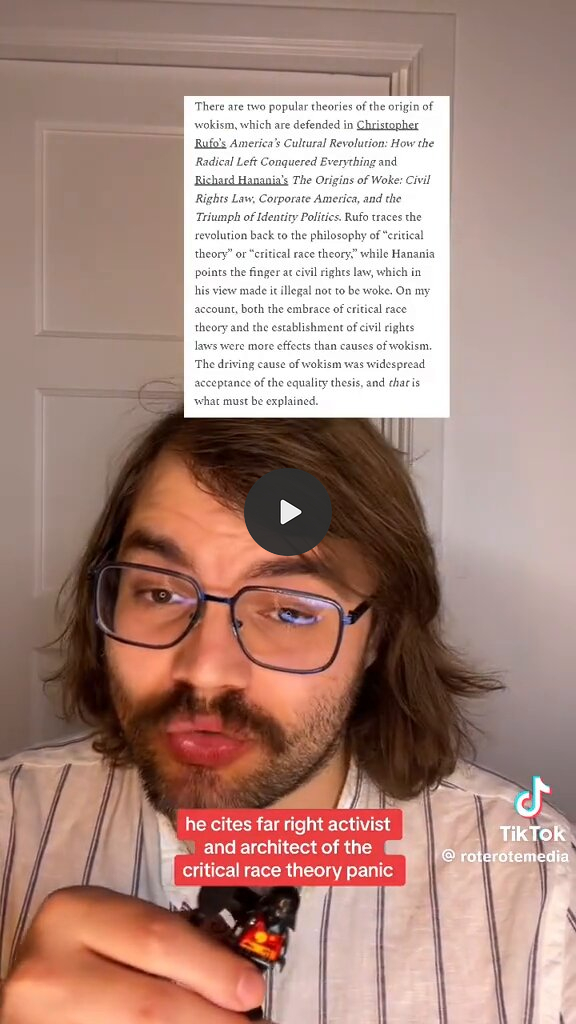
We should all applaud Nathan’s bravery. But the fact that he has become the face of the anti-Arday movement has something to teach us about the fundamental, unbreakable nature of the race/IQ taboo, which people seem to have trouble understanding correctly.
In the two and a half years since I wrote “Shut Up about Race and IQ,” it seems that every other taboo enforced by the left has become weaker, including the one on open racism. This is the culture of the Based Ritual. You’ll find major conservative figures arguing that women should be housewives, vaccines don’t work, authoritarians like Franco were great, and we should deport 100 million imaginary people. On the trans issue in particular, there was a major vibe shift that began the moment Elon took over Twitter, which I predicted would happen at the time. But race and IQ remains forbidden territory. Sure, Trump may refer to Somalis as “low IQ” and that can titillate the racists, but the only people who focus on group differences in intelligence and make it regular to their messaging are generally figures who remain fringe.
Free speech was enough to make trans activists into laughingstocks. But you got your free speech to talk about race and IQ, and here we are still seeing the race science crowd making the exact same arguments as they’ve been making since at least the 1960s without getting anywhere.
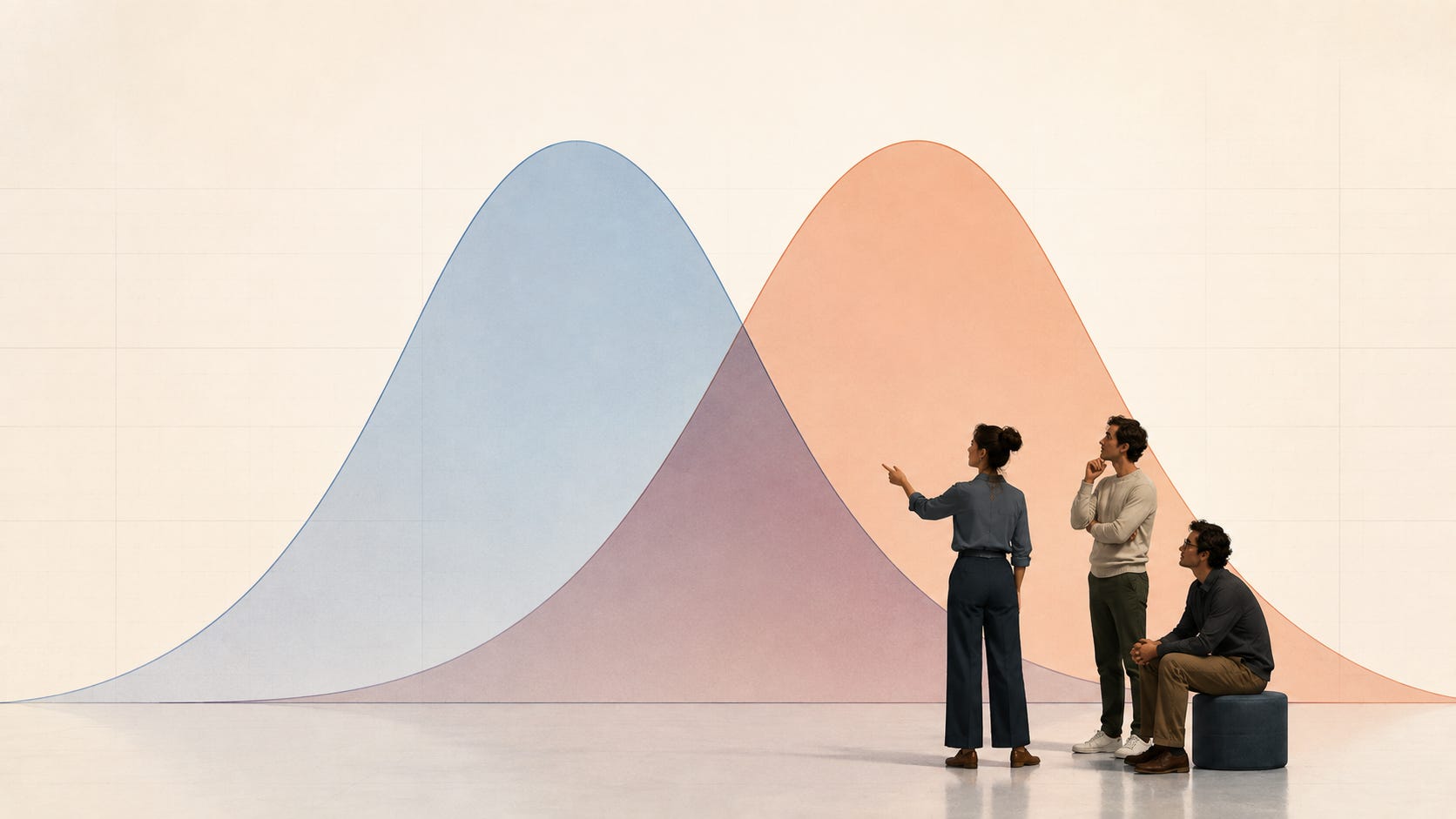
Why does there remain a sense among people across the political spectrum that this taboo must be maintained, or at least is not worth fighting against? Most standard explanations are unconvincing. For example, in the top comment to my article on race science, someone noted that “most normies would find hereditarianism more palatable if they understood that the bell curves overlap.” A famous writer messaged me after publication and said that she liked the piece while making a similar point.
This is a strange argument. Of course people understand overlapping bell curves. If I tell someone that I met a woman who was taller than me, people don’t respond “Impossible! That would mean overlapping bell curves. I thought all men must be taller than all women. I don’t know what to believe anymore.”
You can think of a thousand other examples. “Some kids are more mature than adults.” Not a difficult statement to accept.
If anything, people understand overlapping bell curves too well. Women are able to beat up men on TV much more often than they can in real life. Audiences love a story of the triumph of a protagonist who supposedly couldn’t accomplish something based on their group characteristics, but then overcame obstacles to succeed. And a lot of people seem to not understand that if groups differ on average, then there are likely to be massive disparities at the extremes of the distribution, which is again a case of expecting bell curves to overlap too much.
The real issue here relates to how people think about race, rather than their inability to understand statistics. The taboo on race science rests on the assumption that there are a lot of people out there who just want to be racist, so you need to worry about not giving them ammunition. If certain individuals don’t understand overlapping bell curves – or pretend not to in this one situation – it is due to the nature of the topic. When it comes to race, people who are racist will consciously or subconsciously go out of their way to forget simple lessons, because they’re just looking for tools to denigrate groups they don’t like. In turn, people who think of themselves as non-racist worry about those racists finding inspiration in certain ideas being known and talked about.
This also explains other taboos, like reporting on the misbehavior and crimes of minority populations, though of course everyone can understand at a conceptual level that one bad actor doesn’t represent a group.
You can see the way prejudice clouds judgment in debates about immigration and trade. Huge swaths of the public are desperate to believe that these things are harmful because they involve interacting in some way with outsiders. The arguments for tariffs and most forms of immigration restrictionism are generally dumb, involving fundamental mistakes in logic and empirical misrepresentations that you’d be less likely to see in other contexts. But one half of the political spectrum has made these bad arguments central to its political agenda, showing the power of prejudice to warp people’s thinking.
We see in opposition to Indian immigration in particular that a lot of people just want to hate, and will find ways to do so regardless of what the evidence says. As I’ve previously written:
Conservatives have long recited a litany of complaints about immigration, and none of them appears to apply to Indians. Conservatives worry about illegal immigration showing contempt for the law, or low-skilled new arrivals committing crimes or becoming dependent on welfare. There are often complaints about a failure of assimilation or the threat of terrorism from Muslim arrivals. But Indians are among the highest earning ethnic groups in the country. According to one study, they make up less than 2% of the population, but pay 5% to 6% of all federal income taxes. Their crime rate is negligible, and there is no history of them committing terrorist attacks or contributing to anti-Semitism.
Racists will try to convince you that they just want to have an honest conversation about group differences. Yet what you’ll soon find out is that their “honest conversations” always go in the direction of how everyone who isn’t white has fatal flaws that mean they should be kept out of the country. This is true for both normal anons arguing on X and more intellectual racialists. Helen Andrews, Amy Wax, Steve Sailer, and Ann Coulter all love to cite statistics to talk about IQ or crime differences between whites and blacks, but then will turn around and find completely different and unrelated reasons why immigration from East Asia and India is bad for the country. Recently, Stephen Miller published a post blaming immigrants for lower test scores in New York schools. I wrote this in response:


When someone says “I don’t want Hispanics around, they lower national IQ,” it’s almost always the case that they also oppose Indian and Chinese engineers coming into the country, showing that the intelligence of the population isn’t their real concern. Their supposed interest in standardized test scores, like their interest in crime stats and other issues, is a mask for race-based motivations. Usually, opposition to high-skill immigration rests on cultural arguments, but I don’t find those very convincing. The best “culture” in terms of establishing highly functioning societies is the one created by smart people, who usually have more in common with one another across racial lines than elites have with normies of their own background. That’s why elites are always pro-immigration. Racialists take the side of the chuds of their own race over people who look different, which is treason against all in humanity that is worth celebrating.
Similar to the test scores issue, people understand that, if you meet someone who enjoys saying “blacks have lower IQs than whites,” what they’re usually saying is that they dislike black people. In contrast, when others assert that “equality is a scientifically proven fact,” they are communicating that they think it’s actually bad to detest others for their physical appearance. What people hear when these arguments are presented is a separate question from what is actually true.
If you ban discussion of race and IQ from public life, maybe 90% of the people you cancel will be hateful bigots, and 10% will be well-meaning autists. I’ve never seen any indication that Nathan Cofnas has hostility toward non-whites or that he is not committed to treating people as individuals, but he’s generally the exception, even among intellectuals, while Helen Andrews types and gutter social media racists are much more common. An implicit understanding of the ratio of racists to well meaning actors undergirds the logic of strong taboos on topics like race science. Racists engage in motivated reasoning, and have human nature on their side, so it’s generally tough for people less intelligent than I am to beat them in debates, whether the things they are saying are true or false.
The role of the intellectual is different from that of the politician or activist. There should always be spaces for people to fully explore interesting and important ideas. A presidential candidate probably shouldn’t go around saying “X is true, but most who believe X are bad people, so let’s not talk about X.” But this is a completely legitimate view for an academic or philosopher.
One good reason to talk about taboo topics that you think others shouldn’t focus on is that it sends those who hear the message out into the world better informed. A person who believes that IQ differs by population but we shouldn’t talk about it is going to behave differently from someone who swallows the propaganda of Stephen Jay Gould or Eric Turkheimer.
Ideally, you need to maintain a difficult balance. You want an elite that has the wisdom to avoid harmful topics, but that does not itself buy into politically correct dogma. This isn’t necessarily as hard as it looks.
Here, the intellectual has an important part to play by encouraging sophisticated readers to keep seemingly contradictory ideas in mind. “Yes it’s true, but we shouldn’t talk about it” isn’t that unusual of a concept. Some women are unattractive, poor people have lower IQs than rich people, Midwesterners are boring and unambitious. Anyone who went around trying to build a political movement around such ideas would be presumed to have something wrong with them.
With race and IQ, the reply is that the truth is a necessary defense against the left. But if you’re worried about lies infecting our politics, you need to have a symmetrical concern about promoting people who make really bad and dishonest arguments. The fact that race science is politically and psychologically associated with zero-sum nativist economics means that, by pushing back against the lies of wokeness, you may help those, like Trump and Vance, who have more power than wokes and even less interest in truth.
To make an analogy rightists might be more sympathetic to, recently the DSA put out a statement celebrating the leadership of Fidel Castro. I think this should be a cancellable view. Sure, Castro supporters might occasionally say something true about the history of Cuba. But someone who doesn’t get the big picture point that “Castro is bad” is generally not worth talking to, and even if you could occasionally learn something from them, you’d get a lot more out of using your time to engage with most other people. It’s the same with nativists and white nationalists, who don’t seem to grasp concepts like “the world is not zero-sum” and “it’s wrong to want to legislate against people because you don’t like their physical features.” They may have more genuine points to make than Castro supporters, but their motivated reasoning makes their worldview cursed. In contrast to the thinking of those who belong to such movements, we should want to cultivate the kind of discourse that allows individuals to accept uncomfortable truths while fitting them into a humane and rational worldview. There’s nothing wrong with people who accept scientific arguments that have logic and data behind them, but in the political realm the motivations that they have for bringing up a topic matter a lot.
Cofnas’ whole “So I’m a racist just because I think IQ is heritable?” routine irks me. He’s a racist because he believes people should value people of their own race more than others and that races shouldn’t mix. That has nothing to do with his empirical views.
As someone who generally agrees with Steve Sailer, I take Mr. Hanania's warnings seriously. But he too should be careful. When he writes, "We see in opposition to Indian immigration in particular that a lot of people just want to hate," he is being simplistic. "Hate" is among the most overused words of the censorious left, so it is disappointing to see him using it this way. It is possible, far short of hate, to generally not feel comfortable with certain types of people, to find their ways annoying and so forth. By writing of "hate" to clobber anti-immigrationists, Mr. Hanania takes the extreme case for the norm, which of course makes arguing against it much easier for him.