
Many support democracy because it supposedly gives the people what they want. A better argument in favor of democracy is that it very often doesn’t. Take the issue of price controls, which have broad support across the political spectrum.


The public wants government to tell firms what to charge for products and services, but elites of both major parties almost never do this. Why? Well, politicians are much smarter than the public and listen to experts who tell them that if you implement price controls, you’ll get shortages. Leaders might care about the well-being of the country, or they might be completely self-interested and not want to deal with the backlash from people not being able to find the products that they’re used to buying. Either way, the result is you end up with policy outcomes that are superior to what you would get if politicians just did what the voters wanted.
Interestingly, autocracies seem more willing to shield consumers from high oil prices, though the evidence is mixed: one IMF study of fuel-price pass-through in developing countries finds the political variables pointing that way without reaching significance. As I point out in Kakistocracy, authoritarians have less legitimacy on account of not being elected, so will often make up for it by acting more in accordance with public opinion than democratic leaders do. Dictators also tend to be dumb compared to elected officials, and in many cases may simply not have access to the information that would let them know that price controls are counterproductive.
This post is sponsored by Mechanize. They are hiring software engineers at a base salary of $300K-$400K/year, plus substantial bonuses. They also have openings for other positions, including Research Engineer ($500K base pay), Recruiter ($200K), Growth Manager ($250K), Interns ($150/hr), and legal counsel ($400K). You can even “build your own role.” Here is their website, and you can apply here. If you apply, make sure to use the links provided here so I can receive credit, and name me as a reference in the process.
The fact that authoritarians try to be popular too is something critics of democracy often miss. A dictator also has political constraints. It’s not as simple as “the people are dumb, so let’s have a smart guy make all the decisions instead.” Abolish democracy, and you’ll still have to deal with political realities and humans as they exist.
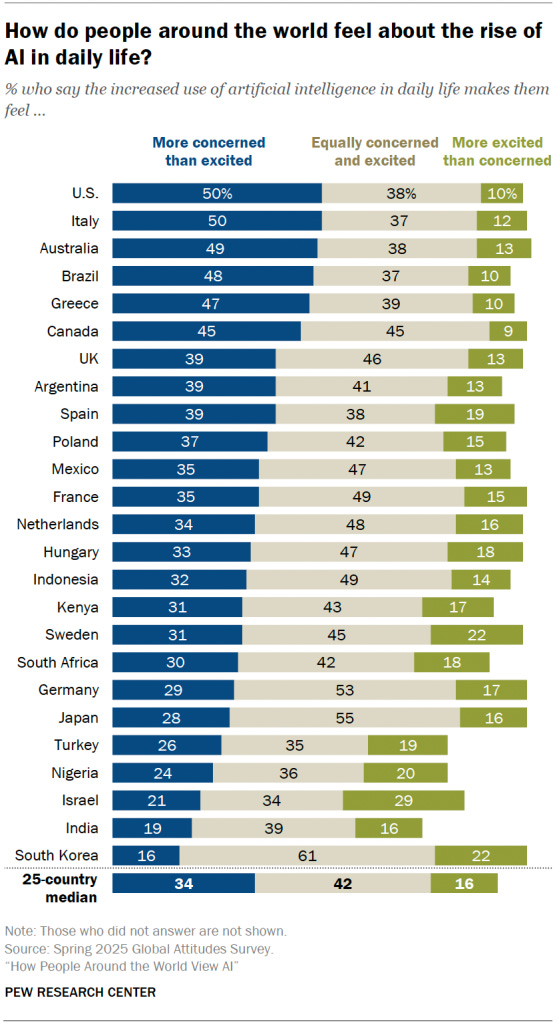
I’ve thought about this in the context of the debate on AI data centers. According to the latest polls, 75% of Americans would oppose one being built near where they live, which is higher than for any other form of infrastructure, including coal plants. And it’s not just a matter of NIMBYism. Sixty-three percent of voters support a data center moratorium of at least one year. In a survey taken last year, Americans were five times more likely to say that they were concerned than excited about the use of the technology in daily life, tied with Canada for the worst ratio of twenty-five countries polled.
Jasmine Sun has been reporting on data center opposition in a sympathetic light, but her work is unconvincing if the goal is to make these activists look reasonable. They seem paranoid and unable to think rationally about costs and benefits. Sun quotes the activists on things that might go wrong for a community when a data center is built, but there is nothing to indicate that they are rationally balancing the probabilities of positive and negative outcomes. In one case, there is useless land sitting there that can be turned into a source of revenue for a Wisconsin community, with the developer picking up a $30 million tab for the cleanup of contaminated soil, and Sun notes that activists would rather the whole area remain a toxic slab of concrete.
