
In accordance with my recommendations, Trump has gone down to Venezuela, seized Maduro and his wife, and brought them back to the US to face charges. I heard my article found some fans in the administration, and although it is highly unlikely that this made the difference, I am happy in the knowledge that there is at least a very small chance that by its marginal influence my piece led to his fall. This was about as clean of an overthrow as one can imagine. As The Economist notes: “A military operation that began in the middle of the night and concluded by sunrise had resulted in an extraordinary act of regime change.”
This certainly complicates my relationship with the Trump administration. I have pointed to the appointment of RFK to lead HHS and previously unthinkable tariff levels to explain my disillusionment. But Trump does a lot of wild things, and this makes him a high variance president. He gave anti-vaxxers control over the public health establishment, and also removed a socialist dictator. No other president would’ve done either of these things, and the first is a threat to the future of medicine, while the second is a great act of heroism. I have chosen to live with the complexity rather than lie to myself in either direction.
As a former noninterventionist, I find the arguments against regime change in this case to be quite unimpressive. First, there is the general appeal to “unintended consequences.” Yes, anything might have unintended consequences. There are also consequences to leaving a socialist dictator in power. Maduro is not your typical authoritarian. The IMF reports that Venezuela’s GDP sank 75% over the last decade or so, which is practically unheard of outside of wartime. There are dictators that are so bad, you just roll the dice and take your chances. Could you get something worse than what Venezuela has experienced? Maybe. But every country in the region save Cuba has done better. Imagine Venezuela goes from the 2nd percentile of governance to the 25th percentile, and that would be a major improvement. We shouldn’t completely discount the possibility that it ends up above the 50th percentile, which happened after regime change in Eastern Europe.
This of course assumes Venezuela will have a government at all, and not just devolve into a brutal civil war, which might in fact be worse than the Maduro regime. Again, the odds here are low. Venezuela is not in Africa, doesn’t have radical Islam as a factor, and has a very recent history of democratic governance. No one knows what will happen, of course, but this is a matter of weighing probabilities, and we have to keep stressing that Maduro is really, really bad.
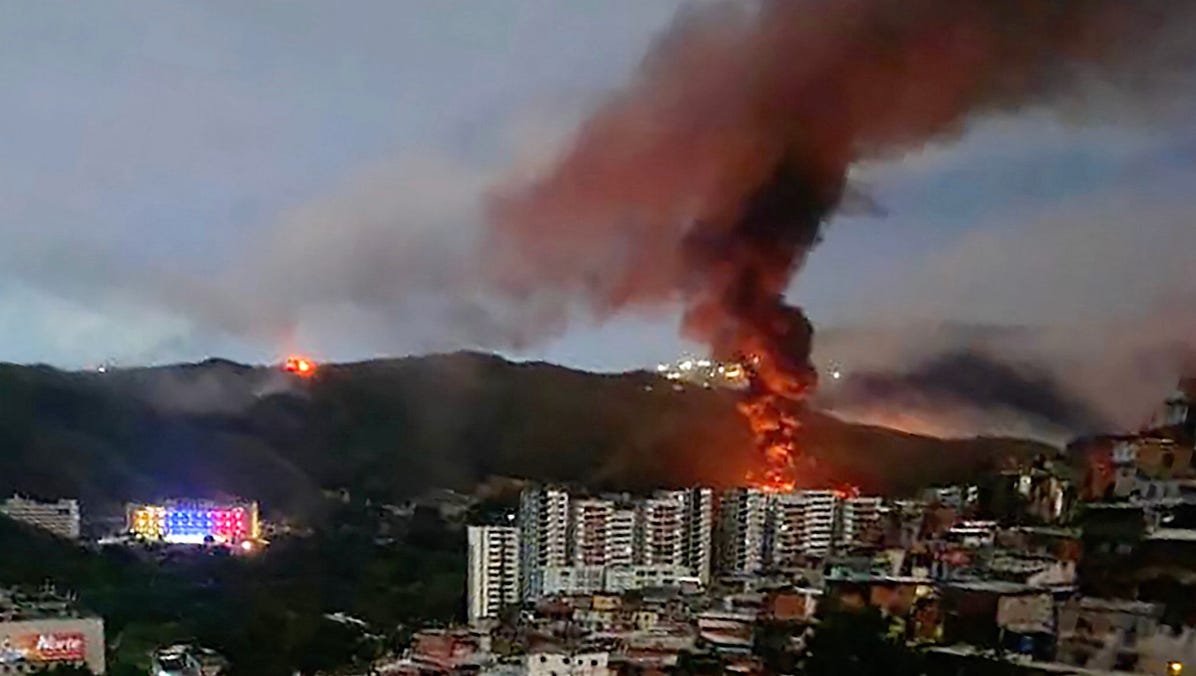
The idea that worries about what might come next should have stopped Trump from acting would argue against removing Maduro internally. Imagine a military commander was considering a coup against the now-deposed dictator. The same argument based on unintended consequences would apply. One would then have to accept the idea that Maduro should rule forever. Things don’t necessarily change because it is the US that makes the final decision rather than a local general. Since “evil dictators get to rule forever because you’re afraid of what might come next” cannot be a principle, we have to accept that sometimes you need to roll the dice if things in poor authoritarian states are ever going to get better. This is one of those cases.
One difference between a domestic coup and foreign regime operation, of course, is the impact on international law. I do think that on the margins these things matter. But international law is not an absolute principle that automatically trumps all others. The idea that socialist dictators who drive their countries into the ground have no legitimacy to me trumps the idea that nations shouldn’t invade one another. Who gets to decide which governments are legitimate and which aren’t? I’d answer the person who hates socialist dictators. That guy gets to decide.
On X, the journalist Gideon Rachman asks what happens now when China tries to seize the president of Taiwan, or Putin goes after Zelensky. “What exactly do we say? You can’t do that, it’s illegal?”

As many have pointed out in response, Russia did try to seize Zelensky! They were stopped through the use of force, not because they didn’t want to violate international law. To the extent that the Russians are restraining themselves in the war now, it is similarly due to fears of escalation. Putin is obviously not being prevented from taking actions simply because the US might have the moral high ground, unless one can point to practical consequences of violating certain norms or principles of international law, like a change in public opinion abroad.
The Zelensky example brings up another point, which is that the taboo on regime change is already a pretty weak one. We can contrast this to the norm against using nuclear weapons, which is strong and has not been violated over the decades. Nagasaki was the last time this happened. There’s a good argument that breaking the nuclear taboo would unleash Pandora’s box, which is why Putin’s suggestions a few years ago that he might take such a step in Ukraine were met by such an overwhelming backlash that even the Chinese warned him against it.
The regime change taboo is flabby. Governments are deposed pretty often. Is it going to make that big of a difference for international norms if a foreign regime change operation has been undertaken, say, 13 times in the last 40 years instead of 12? Before Maduro was arrested, this was something that happened rarely but was far from unthinkable. Today, the world has not changed all that much. The norm is approximately as strong as it was last week. This is a good argument against not doing regime change all the time. If we undertook five of them in one year, that could create a new reality in terms of international norms. But this is not what has happened here.
Again, I have no idea what the future holds. Venezuela could have descended into unspeakable horrors by the time you read this. But we have to make the best judgments we can in the moment, and I simply reject the non-interventionist principle that fear of the unknown means evil regimes get to last forever. There is no hope without taking risks, and this one in particular just makes sense.
This take of Richard’s is naive in the extreme. We can all agree that Maduro’s exit is, in and of itself, a Good Thing. However, carrying it out unilaterally, without reference to the US’s own constitutional requirements such as Congressional approval, speaks to the US regime acquiring the status of a rogue state. I would be hugely surprised if any thought has been given to what comes after - the regime appears to be in place still and apparently there are still some 30,000 Cubans in the country. Cuba itself relies on Venezuelan oil, so we can look forward to a Cuba refugee crisis as that runs out. So well done Trump, who gets a few good headlines from naive conservative pundits and the rest of us enjoy the years of chaos to come.
Not sure this is a “regime change”.
Maduro’s (probably) gone, but the regime isn’t. The VP is in charge, the generals are still there, the Maduro judges are still in place.
Might be the start of something might not.