
I have a new piece in The Boston Globe on why it’s fine that Trump did not go all the way in Venezuela and try to build a new government from scratch. Unlike most of my Globe pieces, this one is not paywalled as I think it’s important to get this message out there now given the criticisms that are coming in from all sides.
Soon after the United States extracted Venezuelan President Nicolás Maduro and his wife from their beds in the early hours of Saturday morning, it became clear that the Trump administration was content to leave his official successor, Delcy Rodríguez, in power, at least for now. Among both proponents and opponents of the operation, a talking point has emerged that if the stated ideology of the regime doesn’t change, then the action didn’t accomplish much. The anti-interventionist writer Glenn Greenwald, for example, sarcastically declared “Venezuela is liberated” over a screenshot of a Wall Street Journal headline informing readers that “Venezuela’s Acting Leader Is a Hardline Socialist Like Maduro.”
This point of view, however, is too binary in its thinking. According to this assessment, Venezuela will be ruled by either a socialist dictatorship or a free and democratically elected government. Yet throughout history, we have seen how a change in leadership can change the behavior of a regime, even if its underlying ideology remains the same.
Consider what happened under the Chinese Communist Party, which seized power in 1949. During the rule of Mao Zedong, tens of millions died from starvation or violence, as the government pursued radical economic projects that kept the population mired in crippling poverty. Three years after Mao died in 1976, Deng Xiaoping took control of the state. He was more flexible ideologically and pursued pro-market reforms that set China on the path to prosperity.
Similarly, after Joseph Stalin’s death in 1953, the Soviet Union freed political prisoners and pulled back, permanently, from the level of internal repression that it saw under his reign.
In both China and the Soviet Union, the government remained officially Communist even as leadership changed. But domestic and foreign policy conformed to the proclivities of the individuals on top.
The political scientist Jeffrey Colgan has found that leaders who were personally involved in revolutionary activities earlier in their lives are more likely to find themselves in militarized disputes with other nations. This might be because revolutionary leaders are selected for risk-taking behavior and strong ideological commitments. Stalin spent his youth as an underground opponent of the czarist regime, but his successor Nikita Khrushchev did not become involved in politics until after it fell. And although Mao and Deng both joined the CCP decades before it seized power, Deng became a member while studying abroad in France, whereas Mao radicalized at home — and would later stake his life on peasant guerrilla warfare.
Even the same leader can change their approach to politics over time. Mikhail Gorbachev did not set out to end the Soviet system, but he was taken in that direction as incremental reforms caused pressure for even more change. By the end of his time in power, he was much more willing to countenance radically different political arrangements than he had imagined a few years before.
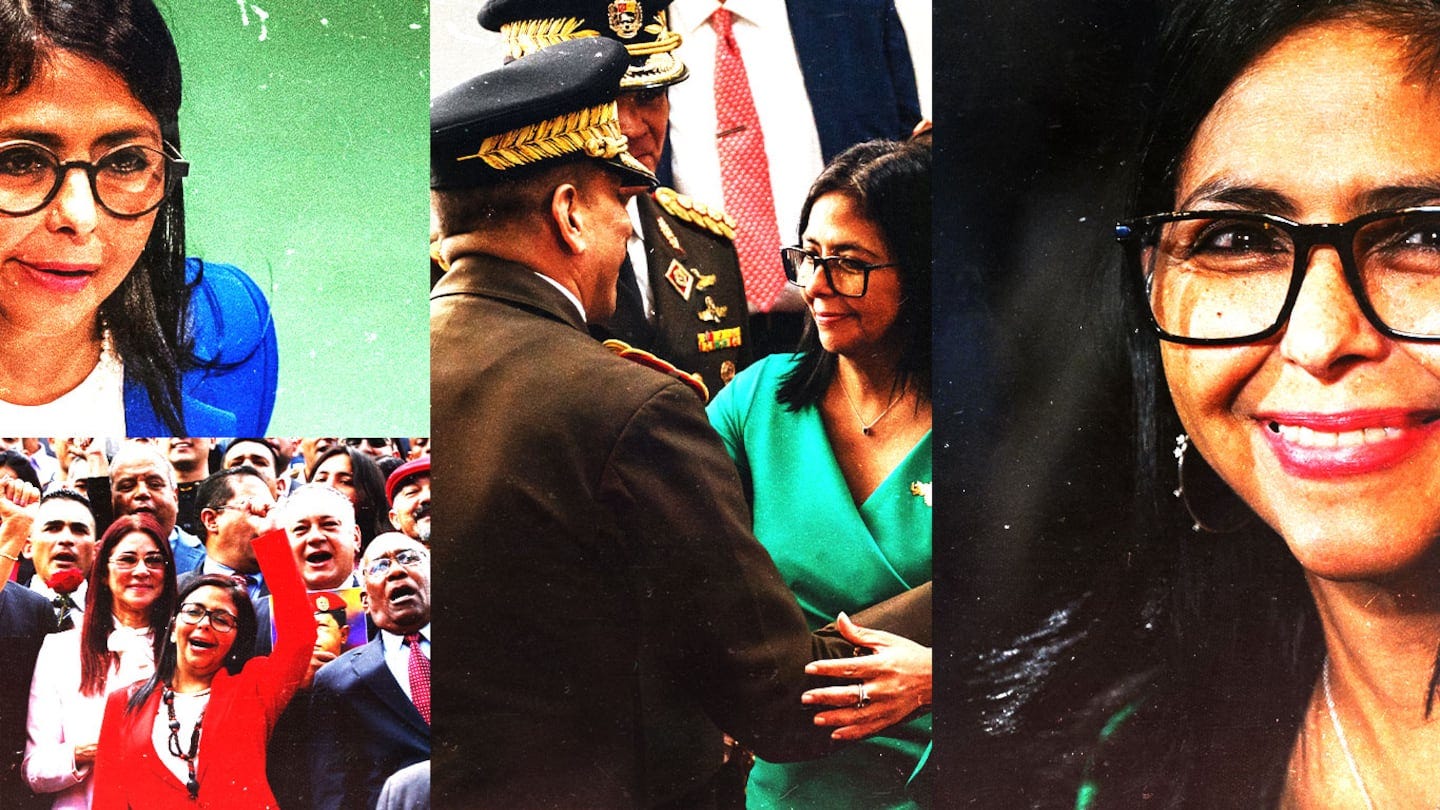
It would therefore be a mistake to assume that because Rodríguez has the same official ideology as Maduro, she cannot take Venezuela in a different direction. She has been credited with stabilizing the Venezuelan economy over the last several years, and the Trump administration apparently believes that she has a pragmatic streak. Not being as strongly associated as Maduro with the policies that have devastated Venezuela, she may feel that she has more room to change them.
Another reason to believe in the more optimistic scenario is the fact that the Trump administration has now shown a willingness to act decisively in Venezuela. Trump has warned that Rodríguez would “pay a very big price, probably bigger than Maduro,” if she continues the policies of her predecessor. Although foreign policy threats are often treated as bluffs, this one is unusually credible. It is worth noting here that, after at first striking a defiant tone right after Maduro was seized, Rodríguez was much more conciliatory toward the United States the very next day.
In Iraq, the United States removed a government and attempted to rebuild institutions from scratch. This is now widely considered to have been a mistake. The Trump administration reportedly came to the decision to deal with Rodríguez after considering how difficult it would be for the internationally recognized opposition to the regime to exercise power. Removing the current leader of Venezuela and then letting a better system gradually emerge might be the right decision, avoiding both the unacceptable costs of keeping Maduro in power and the potential disaster of demanding a complete and immediate revolution after he is gone.
Foreign policy continues to frustrate any attempts to draw simple lessons from history, which is why it remains so widely contested. Noninterventionists can point to situations where regime change has gone wrong. But those who favor a more aggressive posture abroad likewise have their own preferred historical examples to draw on.
Even when we all see the results, debates can remain over what the lessons are. Is the correct conclusion to draw from the Russian invasion of Ukraine that the United States should have been tougher on Vladimir Putin after he seized Crimea in 2014 or that we should not have antagonized him by refusing to rule out NATO membership for that country?
In this case, two things are impossible to deny: Maduro has been an unusually destructive leader, and the US operation to remove him went about as well as anyone might have expected. Many of those, like Greenwald, who are gloating that socialists are still in power would be complaining similarly if the Trump administration had pursued an even more aggressive policy. Recent experience shows that we should be careful about pursuing radical change and that gradualism is often the preferable path to take. Thus far, it appears that the Trump administration has learned the lessons of history well in its approach to Venezuela.
I hate to admit it, but Trump’s foreign policy is really good except for the tariff nonsense. At some point soon I hope to put forward an explainer of his approach to geopolitics that goes beyond the idea that he just listens to the last person he talked to. It’s too bad that he gives white nationalists power and seeks to abolish democracy.
The New York Times podcast from yesterday has more information on Rodríguez and her work on reforming the Venezuelan economy. The story it tells bolsters the argument I put forth here, as she enacted a series of pro-market reforms. And Trump has just announced that the Venezuelan government is going to give the US 30 to 50 million barrels of oil to sell, which is quite odd, but, if true, indicates that they want to play ball.
To say that Trump’s foreign policy is really good except for the tariff nonsense, is like saying that Ted Bundy was a really nice guy except for the raping and murdering.
The bad thing about the tariff policy is not just that it is terrible economic policy, but also that it has totally alienated reliable US allies. Don't forget that this whole tariff business started out targeting primarily Canada and Mexico.
And have we forgotten about how Trump has threated to annex Canada and Greenland? And sowing doubt about US commitment to NATO? The disastrous meeting with Zelenskyj?
Trump has managed to severely alienate all his traditional allies. We cannot in our right minds call that good foreign policy — even if this Maduro business turns out on balance to be positive (which is still too soon to say).
I don't have a problem with Trump being praised for his actions in Venezuela. Where I disagree is in equating this one incident with a relatively small country (with admittedly large oil reserves) with the totality of "his entirely good (sans tariffs) foreign policy."
Antagonizing Denmark, threatening Canada, attacking Zelensky, supporting the AfD, praising Putin, the endless theater of Ukrainian "peace talks" with no discernible benefit, humiliating the South African president on TV without actually obtaining any meaningful concessions within South Africa itself... Lots of fanfare, not much good.
It's really too early to tell what will happen. I hope for the best, but skepticism is warranted.