
In my forthcoming book, Kakistocracy, I devote a brief section to Kash Patel. I’ve always seen him as a kind of poster boy for the concept that is the subject of the book, as there are few figures who more perfectly represent what is at stake when institutions decline and populists take power.
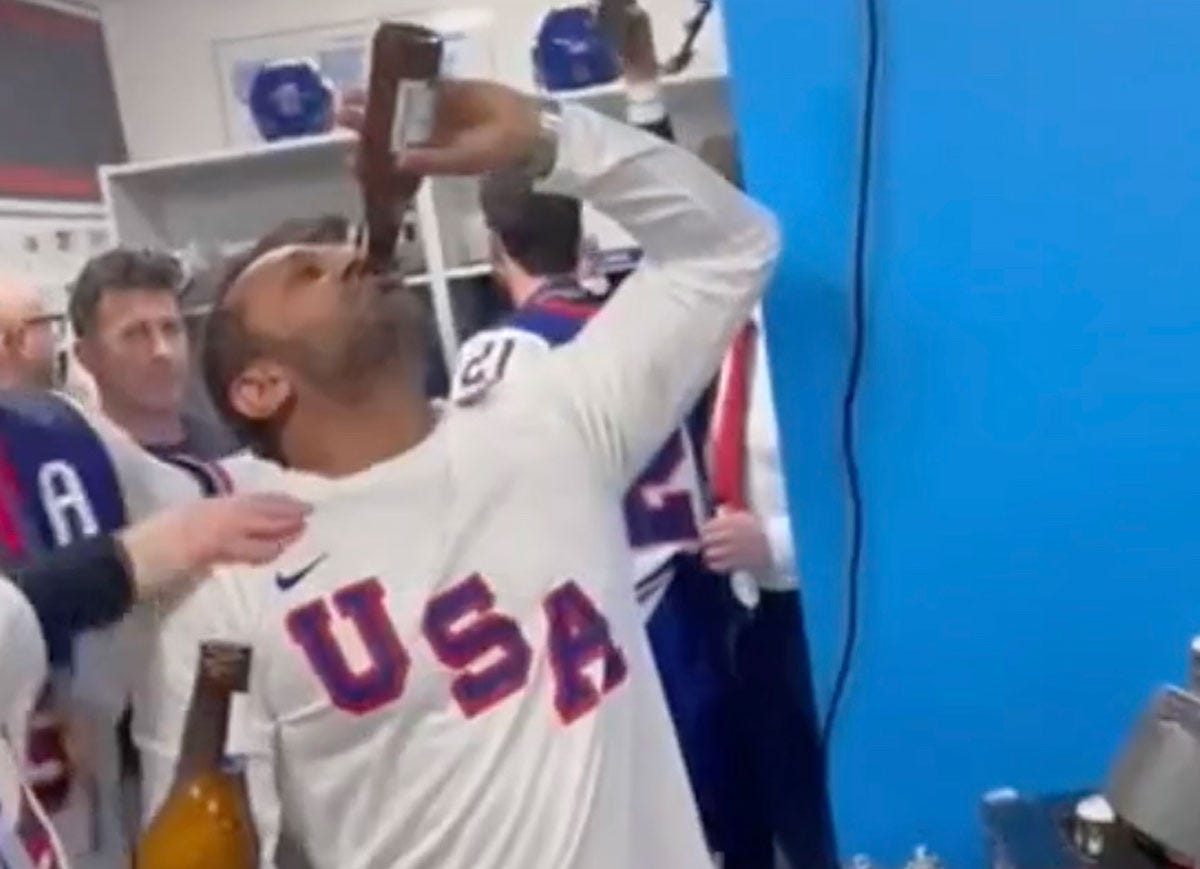
The book was of course written before the recent report in The Atlantic about Patel’s drinking problems, which have people in the government worried. The latest news only adds to the case that I made.
The IT-lockout episode is emblematic of Patel’s tumultuous tenure as director of the FBI: He is erratic, suspicious of others, and prone to jumping to conclusions before he has necessary evidence, according to the more than two dozen people I interviewed about Patel’s conduct, including current and former FBI officials, staff at law-enforcement and intelligence agencies, hospitality-industry workers, members of Congress, political operatives, lobbyists, and former advisers. Speaking on the condition of anonymity to discuss sensitive information and private conversations, they described Patel’s tenure as a management failure and his personal behavior as a national-security vulnerability…
Several officials told me that Patel’s drinking has been a recurring source of concern across the government. They said that he is known to drink to the point of obvious intoxication…Early in his tenure, meetings and briefings had to be rescheduled for later in the day as a result of his alcohol-fueled nights, six current and former officials and others familiar with Patel’s schedule told me.
Upon being asked for comment, the FBI responded with a statement attributed to Patel that threatened to sue, which he soon did. This has become regular practice for him. Patel has previously filed lawsuits against the New York Times, CNN, Politico, and a pundit who appeared on MSNBC. These never go anywhere, because the standards for winning a defamation suit in the US are quite high, and nothing any of these media companies did came anywhere near the necessary threshold. But now we have an FBI Director who sees the justice system as a tool to intimidate journalists.
Professionalized law enforcement is one of the things that most clearly separates societies that function well from those that don’t. We give certain individuals a badge and a gun, let them spy on us, and take some of us away and lock us up in little cells. To keep us there for a while, they need to present evidence to judges and juries, but law enforcement officials are the ones who, within certain bounds, decide who to target and which evidence to gather. There’s no way to avoid simply having to trust that they’re doing their jobs in ways that are relatively fair and impartial.
Political bias has of course always been an issue, and this is unavoidable to some degree because institutions are composed of human beings. But before Trump’s second term, it was widely agreed that you wanted individuals at the top who went to good schools, were respected by their colleagues, followed the rules, and didn’t hawk supplements on the side.
They behaved like decent gentlemen, and avoided behavior that indicated a lack of professionalism or bias. James Comey refused to shoot hoops with Barack Obama because it would give the wrong impression. Before Trump, a DOJ “scandal” was that Bill Clinton had a brief meeting, approximately twenty minutes, with Attorney General Loretta Lynch on a plane at a time when the FBI was investigating Hillary. The Inspector General looked into it and found no evidence that they discussed the Hillary case, nor that Lynch pressured the FBI on the issue. Meanwhile, Trump publicly signs executive orders telling the administration who to go after, and hires and fires officials based on who will most zealously prosecute his enemies.
In 2013, James Comey was appointed by Obama and confirmed 93-1 in the Senate, with only Rand Paul objecting on civil liberty grounds. There were never any questions raised about his character, and he would in subsequent years go on to anger both sides of the political spectrum. Trump broke a long established norm in 2017 by firing Comey, and then appointed Chris Wray, who was opposed by only five Democrats in the Senate, in part on the grounds that he had been hand picked by Trump. But Wray was still widely respected and was easily confirmed. Like Comey, the new director also wouldn’t simply do Trump’s bidding, so he resigned after Trump won reelection and it was clear that he would be fired to make way for someone like Kash.
The list of ways in which Patel’s appointment and tenure as FBI director have broken with previous practices is practically endless. FBI directors were not supposed to change with the president, but rather served 10-year terms so they would be more independent. They were supposed to be individuals whose personal integrity was beyond question. They avoided drinking to excess in public, and scams to milk their supporters for money. Previous candidates for FBI director didn’t even have “supporters” in the way Patel does. They didn’t make the podcast circuit or write books encouraging children to worship the presidential candidate who they hoped would one day appoint them to the position. They didn’t have colleagues and subordinates talking to journalists about their erratic behavior, and when there was reporting they didn’t like, they didn’t file frivolous lawsuits in order to intimidate the press. Previous FBI directors didn’t have memecoins, and didn’t use government resources in order to chauffeur around and provide security for their girlfriend, and then think of ways to criminally go after journalists who reported on it.
I don’t know anyone who would argue that the previous norms weren’t simply better. Nobody ever said: “You know, we need law enforcement that is more corrupt, thuggish, unprofessional, and incompetent.” Comey, Wray, and every previous FBI director were simply better men than Kash Patel – and yes, that includes J Edgar Hoover. It’s hard not to laugh when conservatives talk about “third worldization.” I don’t know how you could invent a figure that would more clearly represent the decline of basic ethical and moral standards than Trump, the candidate of white grievance. And if your MAGA brain can’t process the idea that a white president with a white base of support is what you pretend to fear, then take a look at Kash. Maybe the fact that he’s Indian will help your racial bias overcome your political tribalism and get you closer to truth.
The important difference between Comey and Wray, on one hand, and Patel, on the other, is not “ideology” in any real sense. It is a matter of competence, personal integrity, and professionalism. Patel is playing a different status game than his predecessors. Chris Wray didn’t get sloshed on the job and file lawsuits that would immediately get thrown out of court because he cared what smart and decent people thought of him: the kind that try not to lie, make a good faith effort to be informed about issues before commenting on them, and hold themselves and others to certain ethical standards. MAGA is a populist movement, so individuals get ahead by appealing to the gullible and less informed. Members of their base don’t expect ethical behavior from leaders, and don’t read enough real news to even have a good sense of who is behaving ethically anyway. You will live your life in different ways depending on whether you want to be thought well of by newspaper readers and professionals in your field, or listeners of Benny Johnson’s podcast and nursing home patients with borderline dementia whose names are on Republican mailing lists.
Although we live in cynical times, I think the second Trump administration has served as a reminder of how good we had it in the recent past. In 2020, leftists misrepresented the state of American law enforcement because they did not like what arrest data and police behavior told us about racial differences in crime rates. In recent years, the right has become a cult of personality centered around a conman, and they need to pretend that institutions like the FBI were always so corrupt that it justified them not even having to pretend to adhere to old norms. Both are wrong, but the threat that the MAGA movement poses is more immediate because it is the one with power, and on the right you do not find a more responsible class that makes up enough of a critical mass to check pressures that come from below, and keep in line figures who would appeal to the lowest instincts of the base.
My new book will argue that Kash Patel is not an anomaly. He’s the natural consequence of what happens when low-trust movements that are motivated by the grievances of less informed voters take power. Watching other countries, we usually only get glimpses of what is going on when they are experiencing a populist wave. For Americans today, following the news provides, in granular detail, nonstop reminders of the differences between advanced and less developed cultures, at least for those of us who have long enough memories to remember what our leaders were like only a few years ago.
For some, it’s hard to be truly disgusted with Trump. He’s too funny, and in ways too innocent to hate: a fat toddler approaching 80 who seems to brush off unrelenting hostility from all establishment institutions and the bullets of would-be assassins, and who most of the time barely even pretends that he isn’t lying to you. He even seems to share in the natural contempt nearly all smart people feel for his most enthusiastic supporters. Patel, in contrast, is the kind of figure who typically rides to power on the coattails of a charismatic strongman: a brown-nosing striver who has no talents outside of sucking up. His tenure at the head of the FBI is a blot on the institution and the history of American law enforcement. It is yet to be seen whether this is a one-off or a watershed moment in the decline of professionalism and standards among American elites.
Thanks for reading. If you enjoy articles like this, the global rise of populism is the subject of my next book, titled Kakistocracy: Why Populism Ends in Disaster. Taking a global perspective, it will argue that what we are seeing is not the rise of a new ideological movement, but rather a moral and intellectual decline among leaders resulting from changes in communications technology that allow more uninformed and uneducated citizens to have their voices heard. The Trump movement is the most consequential example of this phenomenon.
You can preorder Kakistocracy at Amazon or Barnes & Noble. All preorders count toward opening-day sales, and will help determine how much attention the book receives. You are not charged until the book is shipped or you receive the digital copy, so there is no reason not to preorder.
On a different note, if a little box appears below, it means that you are not yet a free or paid subscriber. Sign up to get more articles and updates in the future.
Yeah, fine, populism is bad and damaging to institutions. But which do you prefer, Kash Patel at the FBI or a Supreme Court with 6 Ketanji Brown- Jackson's. Because that's the choice on offer. Personally, I'd prefer a Republican party that moved toward more popular positions on economic and social issues, but the Koch network has been torpedoing that for 30 years.
It was worth my time reading just to get to this:
“For some, it’s hard to be truly disgusted with Trump. He’s too funny, and in ways too innocent to hate: a fat toddler approaching 80 who seems to brush off unrelenting hostility from all establishment institutions and the bullets of would-be assassins, and who most of the time barely even pretends that he isn’t lying to you.”