
“Hey, I got no arc either. I was born, grew up, spent a few years in the army, a few more in the can and here I am. A half a wise guy. So what?” – Paulie Gualtieri
As an author, and one who has dabbled a bit in fiction, I’ve sometimes thought about what it would be like to write a TV series or movie. What frightens me about the prospect is the lack of control. When it’s just you creating a story, you are unconstrained. But when what you put to paper has to be performed by other human beings and take on a manifestation in physical reality, a great deal rests on fate. You are constrained by budgets, the capabilities of the actors cast, their chemistry, and a thousand other details.
While the author of a written work can go back and change any part of the story, once a producer has chosen a lead actor or the site of a shoot, there is no going back. A great novel is the product of an author’s mind; the font of the words on the page or the design of the cover contributes little to the appreciation of the work of art. This is a fundamentally different endeavor from one that depends on not only the writers, but the actors, the people working on the props and the set, including the lighting and sound guys, and even factors such as the weather. There’s only so much a creator can control. The unpredictability of how all these things will fit together means that producing a great work is even more up to fate than would be suggested by imagining the difficulty of making each relevant decision individually.
In TV and movies, then, greatness is a collective effort. And regardless of how much we attribute its creation to David Chase, there should be widespread agreement that The Sopranos (1999-2007) was the greatest TV show of all time. James Gandolfini may deserve just as much credit, if not more – he somehow made Tony Soprano a figure who was just as believable and compelling whether he was yelling at his wife, getting sentimental over ducks in his pool, or choking someone to death. Yet the true greatness of The Sopranos is a product of the combination of the actors, the writing, the scenery, and even the exact point in American history at which the story was told.
Here, I am going to explain why The Sopranos was so compelling. There will be spoilers, so if you haven’t seen the show, I would go watch it and then come back to this article. It will still be here. The series can only be experienced without spoilers once, and I would recommend not losing that opportunity, even if it is to more quickly read what I think is a very insightful article on the show.
The Sopranos forces us to deal with deep questions of mortality, identity, and the search for meaning in a pitiless universe. There is never a moment during the show in which the viewer forgets that there is some disgrace and ugliness in every material or moral triumph, or that there is something relatable and compelling in even the most despicable characters. This balance is maintained throughout a story that has a deep meta-awareness, reminding us about the struggles between who we are, who we pretend to be, and the ideals that we aspire toward, while highlighting how much of life is experienced on the edges between these concepts and raising questions regarding how difficult it is to draw those lines at all.
There are three great tensions at the heart of The Sopranos. First, there is the way the past shapes the present, and, through the process of myth-making, how the needs of the present create our picture of the past. This theme is essentially timeless, but in this particular case, the moment in history in which the show is located straddles a turning point in Western culture, allowing for the dramatization of the differences in assumptions and outlook between those born before and after approximately the early 1970s.
The second great tension revolves around who exactly we are and where the ideals that motivate behavior come from in the first place. Both of these themes are closely linked, as heuristics about the past shape who we think we should be, whether in terms of setting standards to aspire toward or rebel against. Finally, there is the contrast between greatness, beauty, glamour, and glory, on the one side, and what is ugly or even simply mundane, on the other, and how the show manages not to flinch in the face of either side of the human experience. The comedy, the action, and the investment in the characters are of course essential aspects of the show, but it is these three great themes that provide the context that sets The Sopranos apart.
Are We All Just LARPing?
The self-awareness of The Sopranos nearly always avoids devolving into tedious navel-gazing – and even when it does, the resulting neuroticism itself becomes the subject of implicit or explicit debate – as when Tony tells Paulie that “‘remember when’ is the lowest form of conversation.” The characters, New Jersey mobsters living through the turn of the millennium, realize that they exist in a historical context, which shapes their expectations, behaviors, and perceptions of themselves and others. They’re not only members of the Mafia; they’re fully aware of what this means when placed in the larger American culture. They’re walking clichés, but they know it, and society has changed enough that they’re going to have to adjust to new circumstances no matter how attached they are to the old ways.
The opening scene of the second episode has Tony and his crew in the back of the Bada Bing strip club, counting their money and watching a news show discussing the decline of the mob.
The panel talks about how arrests are being made, guys are flipping, and the old codes are breaking down. Tony shakes his head: “The shoe fits.” He asks Silvio to cheer him up. Silvio stands up and does his Godfather III impression: “Just when I thought I was out, they pull me back in!” The guys have a good laugh. Then it’s back to the TV, and they watch the former mobster-turned-bestselling-author being interviewed. “The party’s over… You know, the heyday, you know the golden age, or whatever, of the mob? That’s gone, and that’s never coming back. And they have only themselves to blame.”
At the wedding of Johnny Sack’s daughter, Chris asks Tony whether he has agreed to whack Johnny’s rival because he can’t refuse to do a favor for the father of the bride on the day of his daughter’s wedding.
Momentarily confused, Tony says it’s actually the other way around, and that he should be the one asking for something. Chris replies that, in that case, he should ask Johnny for the favor of not doing it. Tony: “I already fucking agreed!” The meta-awareness here is part of what makes the scene so funny.
In The Godfather, the norms of the mob are taken for granted, while in The Sopranos they’re being constructed and negotiated based on the needs of the moment, and also what the characters see in movies and on TV.
This happened in real life. According to the sociologist Diego Gambetta, mob movies led the actual Cosa Nostra to shape their behavior and standards in accordance with what they saw in fictional representations. David Chase himself said that to mobsters, The Godfather was “their Bible, their Koran. Their Mona Lisa, their Eiffel Tower.” Famed hitman and government snitch Sammy “The Bull” Gravano recounts how he took lines from the film, and would talk about “making an offer you can’t refuse.” They saw it as validating what they were doing, and placing their experiences at the center of American culture. Gambetta writes that the influence of the film extended to the criminal undergrounds as far away as Russia and Japan, demonstrating that memetic influence crosses borders and cultural barriers. Donnie Brasco is said to be less popular among members of the Mafia for presenting a much less romantic image of their lives. Gambetta notes that when The Sopranos portrays the sociological phenomenon of mobsters learning from the movies, “We have come full circle: now art imitates low life imitating art.”
But, as with many institutions, there’s a sense that the grimy present cannot live up to the glories of the idealized past. The opening scene of the entire series has Tony in the psychiatrist’s office with Dr Jennifer Melfi. Tony getting mental health treatment for his depression and panic attacks, and going on Prozac, is itself seen as a sign of modern corruption. He hides all this from his associates, and when his secret is revealed he is almost killed as a result. In the first meeting with Melfi, we get the following exchange.
Tony: I don’t know. The morning I got sick, I’d been thinking. It’s good to be in something from the ground floor. And I came too late for that, I know. But lately, I’m getting the feeling that I came in at the end. The best is over.
Melfi: Many Americans, I think, feel that way.
Tony: I think about my father. He never reached the heights like me. In a lot of ways he had it better. He had his people, they had their standards, they had pride. Today, what do we got?
The series captures the mood of the moment between the end of the Cold War and 9/11, as the economy was booming, and, since peace and prosperity had been achieved, societal problems were understood in moral and psychological rather than material terms. Bourgeois or suburban malaise being seen as a serious enough problem to be the subject of art only happens during eras that are optimistic overall. The Sopranos came on the heels of movies with similar concerns like American Beauty, Fight Club, Office Space, and The Ice Storm. Social problems like school shootings and new kinds of music such as grunge were analyzed from the perspective that we had achieved too much safety and success.
The Sopranos was another piece of art focused on suburban malaise, but within the framework of a mob show, which created a fascinating dynamic given that the Italian gangster exists as one of our cultural figures most recognized for being deeply rooted in his community and comfortable with his place in the world. The wise guy doesn’t sit around talking about his feelings, or whining as he wonders what we were put on this earth for. Or at least he didn’t, until Tony came of age.
There’s a class dynamic here too. While Tony and his crew live with the contradictions of being part of the mob at the historical moment during which their self-image and way of life were becoming impossible to maintain, Melfi, her ex-husband, and her social circle of white-collar professionals discuss adjacent topics at a more abstract level, such as whether Italian-Americans should feel insulted by their portrayals in TV and film or see them as a sign that they have made it. In real life, The Sopranos faced attacks from Italian-American organizations, and these types of scenes were part of a running dialogue with the audience.
The sordid history of worries about anti-Italian discrimination can be found in the fact that one organization devoted to that cause was founded by mob boss Joseph Colombo. There was even an Essex County Executive who denied a permit to shoot the Sopranos episode “Pine Barrens” in his jurisdiction on the grounds that it portrayed Italians unfavorably. Amusingly, he later went to jail for corruption. In The Sopranos too, those who scream loudest about anti-Italian stereotypes are the worst possible spokesmen for their group.
As Melfi notes, the nostalgia that the Mafia feels for its golden days has a direct analogue to how many Americans see the trajectory of our society. Over time, the show reveals that the fond memories of the past rest largely on misperceptions. We look back at a time when people were much more into keeping up appearances, and there were no gossip websites or even 24-hour cable news stations to give us a more fine-grained picture of reality. While Tony romanticizes his mobster father, Johnny, the flashbacks show him being little more than a petty crook. He eventually meets Fran, his father’s old girlfriend, and is at first taken in by her charm and the story of her affair with JFK. But Tony then grows disillusioned. He finds out that Fran kept smoking around Johnny even after he got emphysema, and that she was with his dad the night his mother had a miscarriage. The ultimate breaking point is when Fran puts on what is said to be JFK’s old hat, and the elderly woman serenades him with her version of Marilyn Monroe’s “Happy Birthday, Mr. President.”
It makes for uncomfortable viewing. Tony, who has a voracious sexual appetite, is repulsed by this elderly woman trying to impress him and being deluded enough to think that she can still rely on her seductive charms. The visceral disgust felt toward Fran in that moment – rather than anything about how Johnny’s affairs hurt the family – being the straw that broke the camel’s back is the kind of realistic touch that most shows and movies would shy away from. Human beings do things for complicated reasons, and it’s often the case that the less noble motives are the ones playing the dominant role. By the end of that episode, Tony is back in fantasy land, exaggerating the extent of Fran’s relationship with Kennedy to his crew. We are left to wonder whether the affair was even real in the first place. The title of the episode, “In Camelot,” alludes to not only Fran’s delusions about her past, but also how the country remembers JFK.
Human frailty is a common theme. We watch Junior decline from the acting boss of the DiMeo crime family to a senile old man peeing his pants and allowing himself to be given debilitating sedatives in order to not be put in diapers. Chris Moltisanti struggles with drugs and alcohol and keeps relapsing, at one point killing his fiancée’s dog by sitting on it while in a daze. Beautiful, glamorous women are shown to be self-destructive basket cases, most notably Gloria Trillo, who hangs herself after a stormy affair with Tony.
Yet, still, the glamour is just as real as all that is venal and degrading. When she herself finally goes into therapy, Carmela admits that she not only always knew who her husband was, but that she liked him for it. The most memorable scene demonstrating his appeal to women comes after Tony runs into Melfi at a restaurant after he has stopped seeing her as a patient for the first time. As de facto boss of the family, Tony is holding court and in command of his underlings as they eat, drink, and enjoy themselves. Melfi, coming upon this scene, and drunk, stops to say hi to Tony. She’s trying to build rapport, and he’s in essence blowing her off. As she leaves, she waves at him girlishly and gives him a “Toodle-oo.”
With Melfi gone, the conversation continues to revolve around impressing Tony. Paulie makes a gay joke at Sil’s expense, and then repeats it to make sure that his superior heard what he said. Cut to the next scene. Melfi is in the office of her own psychiatrist. “Toodle-Fucking-Oo? What the fuck was that? God, I couldn't sleep all night, I was so embarrassed.” Melfi concludes that she regressed to a girlish state out of a sense of guilt from abandoning a patient, and she must take him back. This is a very flattering interpretation, and puts her in the role of the concerned professional adhering to ethical guidelines. The more obvious interpretation is that, seeing him in his element, she was attracted to Tony, and this is why she continues to let the doctor-patient relationship emotionally drain her despite seeming to know deep down that he’s never going to fully commit to the therapeutic process. Later in the series, with more self-awareness she admits that she was once attracted to Tony, but that as more and more of his inner ugliness came out, that interest turned to disgust.
One of the clearest signs of Tony’s moral rottenness is revealed when he is with Janice and Bobby, and his sister is happy that she has finally got her anger under control. Tony can’t stand the idea, and provokes Janice by bringing up her estranged son until she snaps. The beauty of the scene is in the buildup, where Janice being able to calmly handle a telemarketer and sharing a fact she read about the decreasing costs of computing are enough to cause him to boil with rage. Tony walks away triumphantly as “I’m not like everybody else” by the Kinks plays in the background. He isn’t like this every moment of his life. Sometimes Tony is sentimental and kind, as when he is outraged by Tracee’s killing or feels bad about the black cop whose career he ruined and tries to give him money. But there is a simmering hatred aimed toward many of those around him that erupts in moments like this. While provoking Janice isn’t as bad as murder, this scene shows the extent to which Tony is malicious when there is no material reason to be, or even an issue of honor at stake.
The mobsters eat lavish steak dinners, seduce beautiful women, commit spectacular acts of violence, crack hilarious one-liners over drinks, and sometimes choose death or long prison sentences over dishonor. This is done while raising children in nuclear families and therefore leaving behind more legitimate and meaningful legacies. But they are also consumed by petty jealousies, driven by insecurities, cruel to outsiders and even their own family members, and committed to a moral code that can’t be justified by any universal or transcendent standard and that nearly everyone suspects is a facade to justify criminality – rarely emerging intact when subjected to pressure. They kiss up to those above them and kick those below. They’re also subject to universal human frailties, which the show portrays unsentimentally. To understand The Sopranos as nihilistic or exclusively bleak in its outlook is to miss the point – the meaning of the entire story comes from the actual glamour of the Mafia and the romance of a life filled with adventure, danger, and sex, and what is ugly in these men and their lives is powerful because of the contrast that it provides.
These New Jersey mobsters are LARPing. But everyone has always been LARPing, and the late 1990s were perhaps the time Americans finally started realizing it, at least in terms of what was going on among their contemporaries. Looking at professional basketball, which I followed closely growing up, there was an unironic magic about Michael Jordan’s Bulls. Over the next decades, Kobe, LeBron, and Curry came along and proved themselves to be all-time great players, but they were a lot more relatable. Our experience of athletes went from being shaped by well-curated magazine pieces and TV interviews to consisting largely of following them on social media and observing awkward attempts to prove that they are just like us.
The crew’s dealings with Hasidic Jews in the third episode of the series present a community that places in stark relief what the Italian mobsters feel they have lost. A hotel proprietor named Shlomo Teittleman wants to cut his son-in-law, Ariel, out of the business, but for that he needs him to agree to divorce his daughter. Shlomo promises Tony a quarter of the hotel business if he can force Ariel to relent. Tony, Paulie, and Sil try to get the son-in-law to agree by roughing him up and threatening his life. Yet Ariel will not give in, deeply impressing his tormentors. While being detained, he tells them the story of Masada, in which Jews chose death over enslavement. “And the Romans, where are they now?” Tony replies: “You’re looking at them, asshole.”
At first, I thought that this was an amusing throwaway line with no deeper meaning. Italian-Americans from New Jersey might share a cultural link to Ancient Rome, but the connection is too attenuated to be worth pondering at length. But maybe Tony, Paulie, and Sil are actually Romans? Who were the Romans anyway? Men who took over the Mediterranean world and much of Europe due to their ability to employ organized violence, underwritten by a moral code that stressed loyalty to the group and individual honor. The Romans, like Italian mobsters, were insecure about their level of cultural sophistication, and therefore sought inspiration from Greece. After their initial conquests, they began to value poetry and the arts, which parallels Tony and Carmela dreaming of their kids becoming successful professionals.
The story of the Hasidic Jews ends in the most hilarious way possible. The guys compel Ariel to agree to the divorce by threatening to castrate him, upon the advice of Hesh Rabkin, a Jewish friend and business associate of Tony who had warned against dealing with such fanatics. After going through all this trouble, however, Shlomo tells Tony that, never mind, he worked out a deal with his son-in-law. Tony wanted 25%, Ariel wanted 50%, so he compromised and gave his son-in-law 15%. Nonetheless, he would pay Tony for his efforts. Feeling the need to expound on his generosity, Shlomo begins “As the Talmud says…” Tony responds by knocking his hat off, grabbing Shlomo by the collar and declaring “I don’t give a shit what he says, okay?”
The most tragic trajectory is that of Chris. He’s a romantic, and still believes in the old ideals of Cosa Nostra. When his fiancée, Adriana, reveals that she has been talking to the FBI and asks him to also start speaking with law enforcement, he goes to Tony, who has her killed. That Chris would do this is foreshadowed in an earlier scene when she raises the possibility of them getting out of the life, and he grabs her head: “I’m a soldier, Adriana, when you gonna understand that?” Having chosen Tony and his image of himself over the love of his life, Chris appears to move on, and later gets married to a different girl after knocking her up.
Adriana’s death hangs over the rest of the relationship between him and Tony. Chris believes his boss owes him. Tony asks how many times he’s going to play the Adriana card. The younger man’s sobriety creates tension with the rest of the family, and they make fun of him for being unwilling to drink. Tony eventually murders his protégé by holding his nose so he chokes on his own blood after they get into a car accident together. In the immediate aftermath of the crash, an injured Chris, stuck in the driver’s seat, tells Tony to call him a taxi since he’ll never pass a drug test. Tony sees that the car seat of Chris’ daughter in the back was destroyed, and decides that he has given his distant relative more than enough chances.
For the rest of the episode, Tony has to walk around pretending he’s just as broken up about Chris’ death as everyone else, who all assume that the accident killed him. To Melfi, Tony confesses that his passing was a relief. He was weak, and was always a risk to rat him out. Tony mentions what happened to the car seat to his wife and a random young man he’s sitting next to at Chris’ wake, without getting the response he wants. Finally fed up, Tony takes a trip to Vegas, and does peyote with an escort who knew Chris. Upon winning some money on roulette, he says “He’s dead” and falls on the floor laughing.
The contrast between Tony, the cold-blooded murderer who smothered his surrogate son in a final, ultimate betrayal, with Chris knowing it as he chokes to death, and Tony, the guy looking for someone to reassure him that he did the right thing by acknowledging the meaning of the car seat being destroyed, along with repeatedly mentioning that the deceased wasn’t wearing his seatbelt, is a haunting yet funny demonstration of the kinds of petty concerns and lonely insights, whether genuine or self-justifying excuses, that must accompany any great crime. As seen in his disgust toward Fran’s singing, it is weakness that Tony truly hates, and that is the real reason Chris had to die. And the glamour is there too: the girl he celebrates with in Las Vegas is the most beautiful of the series.
Chris never forgave Tony for Adriana. This is seen clearly when he produces a mob movie in which the don sleeps with his underling’s girlfriend, reflecting what he believes happened between his boss and his fiancée – and which probably would have happened, if not for yet another conveniently timed car accident earlier in the series when they were off to get drugs together (an underrated funny moment here is when Chris denies that the movie is about Tony on the grounds that the girlfriend in it is “Oriental”). The fact that Chris at some level hated his mentor only makes his standing by him the whole time seem even more tragic. Perhaps Tony was right. Chris was weak, and he proved it when he let Adriana be killed. But I don’t think his downfall was unrelated to his interest in the arts. Chris was an idealist, and there was no way he would have been able to become a rat without destroying his self-image. It was this romantic streak in his personality, in addition to a moral cowardice and lack of imagination, that ended up destroying him.
The Critique of Therapy Culture
Tony’s hatred of weakness is intimately related to his sense of what has gone wrong with American society. The fact that he benefits from psychiatric help is a source of shame for him, and he’s constantly expressing the view that we need to return to the ideal of the strong, silent type of man. “Whatever happened to Gary Cooper?” is The Sopranos’ version of “Who is John Galt?”, with each rhetorical question serving as a refrain summing up the lesson of the world it inhabits.
Tony’s societal critique is the gangster’s version of Jonathan Haidt’s books, but made a generation earlier, before victimhood culture had reached its apex. But is there truth in this worldview, or is it an attitude that is held only because it fits with the psychological orientation of a mentally ill mafia boss?
As with nearly everything in the series, the answer is a little bit of both. Throughout the show, we learn that Tony has a point. Melfi eventually stops seeing Tony for good when she realizes that she has been enabling him, and if anything making him a better – and less conflicted – criminal. When Carmela goes to an old Jewish psychiatrist named Dr Krakower, she at first denies that Tony is a bad person. He asks her whether a philandering criminal is her definition of a good man. Carmela responds “I thought psychiatrists weren't supposed to be judgmental.” Dr Krakower replies with what is perhaps the key thesis of the entire show: “Many patients want to be excused for their current predicament because of events that occurred in their childhood. That's what psychiatry has become in America. Visit any shopping mall or ethnic pride parade and witness the results.”
The connection between identity politics and a culture that coddles people and makes them fragile is made most explicitly in the episode “Christopher,” which revolves around a dispute between Italians and Native Americans about how to remember Columbus.
In her conversation with Dr Krakower, Carmela is informed that she is an enabler who benefits from her husband’s crimes. The only moral thing she could possibly do is leave him. Carmela refuses to understand and tries to reframe the advice in modern therapy-speak: “So you think I need to define my boundaries more clearly, keep a certain distance, not internalize my…” The doctor cuts her off: “What did I just say?” Carmela: “Leave him.”
Krakower refuses to take her “blood money,” and reminds Carmela that, whatever else happens, she can never say that she wasn’t told. She actually tries to leave Tony a few years later, but finds that there is no way to do so without taking a major hit to her standard of living, and so Carmela always returns to her rationalizations, at one point telling Melfi that there are far bigger crooks than her husband.
The development of Anthony Junior teaches a similar lesson. Tony’s son is a deeply unlikeable character. The boy was unfortunate enough to inherit his father’s tendency toward depression, without the smarts, courage, or leadership skills. While his sister Meadow goes to Columbia and decides between becoming a doctor or a lawyer, AJ was a NEET at the time when that phrase was being invented to explain the phenomenon of young men who weren’t in school, weren’t working, and generally weren’t good for anything.
When AJ gets caught destroying school property, he can’t even come up with a half-hearted justification for why. As a young adult, he enrolls in classes and then drops out of school, and picks up jobs and then loses them before long. His self-pitying excuses for his behavior are laughable – when he gets fired from Blockbuster for reselling promotional materials he was supposed to discard, AJ tells his parents that throwing them out would have been bad for the environment. As the series takes place in the early days of the War on Terror and the American interventions in Afghanistan and Iraq, AJ gets interested in the politics of the Middle East, but following the news seems to serve more as a justification and stimulant for his bottomless anxiety and depression than as a product of genuine intellectual curiosity.
We see AJ being failed by institutions that are supposed to mold young men into productive citizens. When his parents expect him to be disciplined, they’re told that his school eliminated detention due to a lawsuit. At one point, they resolve to send him to military school, and Tony is disappointed to learn that even the armed forces have gone soft.
Tony’s skepticism about psychiatry erupts when he is told that AJ might have ADD. As it turns out, he exhibits five out of nine symptoms, with six being the cutoff for diagnosis. Tony loses it when they list “fidgeting” as one of the criteria. What exactly constitutes a fidget? Here, Tony has stumbled upon the concept of diagnostic inflation and the subjective standards that allow poor choices stemming from character flaws to be medicalized in the service of helping individuals and families avoid responsibility for their behavior.
Carmela, in contrast, is delighted. The boy’s poor behavior and the general idiocy with which he goes through life can be explained away. He has a disease! When Tony says the kid just needs to be whacked upside the head, Carmela asks whether he would hit someone for having polio.
Yet, in the last season, when AJ is around 20 years old and still going nowhere in life, something begins to change.
Throughout the whole series, Tony and Carmela have been fighting over whether he needs more discipline or a lighter touch. Finally, he gets on track. The turning point is when Carmela goes on a trip to Paris, and Tony is finally able to discipline him in his own way. Tony informs his son that he’s going to start working construction early the next morning, breaks the windshield of his SUV, and tells AJ not to test him. The transformation is not immediate, and AJ’s struggles are far from over. But he does begin working a real job, and meets a Puerto Rican girlfriend named Blanca. She breaks up with him though after a brief engagement, and this is when AJ reaches his lowest point, trying to drown himself in the family pool. But he is saved by Tony, and ultimately recovers. By the end of the show, AJ appears to have decided to join the military. His parents talk him out of it by getting him into the movie business, with the added incentive that Tony might help fund a club for him to run once he gains some experience. When we leave AJ, he has an attractive new girlfriend, a job that might lead to something better, and seems happier and more alive than ever before, except perhaps when he was dating Blanca.
Here we see a realistic positive arc. AJ is finally forced to get out of the house and work, and things start to fall into place. But it’s still two steps forward and one step back – or sometimes maybe three steps back. Even the suicide attempt is an indication that he at least cared enough about something to be crushed by losing it, a change from what we saw during most of his teenage and early adult years.
This is not to say that there is nothing to the modern therapeutic approach. When her patient goes off on rants about how his son just needs a good beating, Melfi asks how that worked out for Tony himself. We see recurring reminders that we tend to see the past through rose-colored glasses, and the reality was often less glamorous and much darker than we imagined. Anthony might be a mope, but he has a conscience, and is incapable of becoming a sociopath like his father.
It’s far from clear that either the father or son can ever be happy. Tony cries about the “putrid genes” he has passed on, ensuring AJ will live a life of misery. While skeptical of therapy culture, The Sopranos consistently raises the specter of hard genetic determinism. And although I think that on balance the show sees modern psychiatry as a net negative for society, it is not completely in denial about the benefits it provides to some people, or the positive results that come from being more reflective, even if this too often reaches the point of neuroticism.
No One Ever Changes
Chris dreamed of writing movies. Though fatally committed to the family, there was always a part of him that wanted to get away, whether by moving to Hollywood or cutting a deal with the authorities. When Paulie notes that Chris seems depressed, he responds that his character seems to have no arc, like characters in movies. Paulie replies, “Hey, I got no arc either. I was born, grew up, spent a few years in the army, a few more in the can and here I am. A half a wise guy. So what?”
This conversation is particularly tragic in light of Chris’ ultimate fate. He did have an arc, but it was a path of degradation and betrayal, choosing Tony and the image of himself as a soldier over a life with Adriana, and then being murdered by the man he looked up to and sacrificed everything for. The course of events involved his sobriety being met with derision, which led him to return to drinking and doing drugs. Being in an impaired state of mind caused the car crash, which gave Tony the opportunity to do away with the man he, in a dream, imagined calling “a weak, fucking sniveling, lying drug addict” and “the biggest blunder of my career” once and for all. One of the scenes that hit me hardest is when Chris was talking about the joys of fatherhood and pouring out his soul about how much he loves his daughter. Paulie responds by joking that she’ll eventually be working at the strip club. While everyone else is laughing, including Tony, Chris ends up in shock and stumbles away drunk.
This happens after the guys pressured him into drinking and using drugs again. Chris had complained to Paulie that they hated his screw-ups when he was an addict, and make fun of him now that he’s sober. What do they want? Paulie tells him to be normal. But Chris was unable to drink in moderation, which would have been the only way he could effectively do his job. The mockery of his daughter serves as a final humiliation before he chokes on his own blood.
Most of the other character arcs are less dramatic, but serve as a reminder that people generally don’t change to any significant degree. When Tony gets shot by Junior, there is some hope that it will lead to a greater appreciation for everyday life and more ethical choices. Before long, however, he’s fallen back into his old habits. The tragedy is that, as with Chris, there appears to be no other way things could have gone given the nature of the life that he has chosen. When Tony gets out of the hospital, he notices his crew subtly showing less deference to him. After talking things out with Melfi, who once again gives him general career advice while being in denial about it, Tony decides he has to beat up a young meathead to reestablish dominance. Moreover, compromise and a long-term business relationship based on mutual trust turn out to be impossible when dealing with Phil Leotardo.
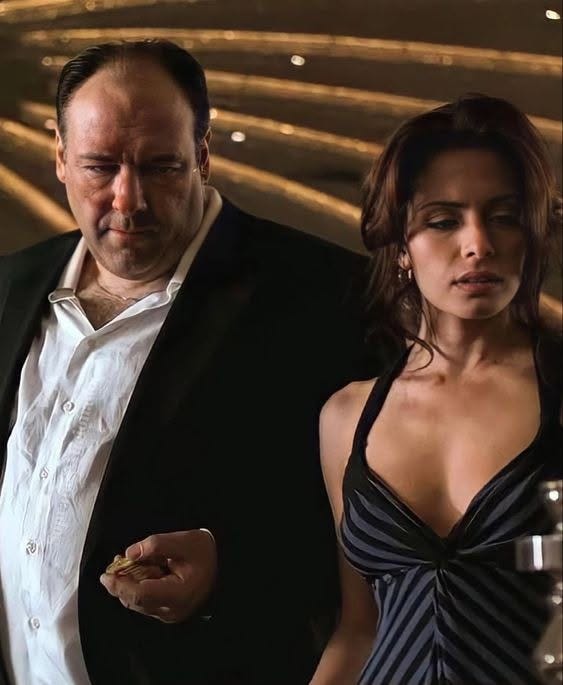
Hints that Tony could have had a different life are found in the dream sequence when he is in a coma. Tony is involved in a business that is adjacent to weapons contracting, which makes sense given the real Tony’s interest in the history of warfare. The question the Kevin Finnerty storyline asks is what Tony might have been had he not been born into the mob. There is still a family man who nonetheless is willing to cheat on business trips, still depressed, and still interested in military technology, but not a violent thug. These episodes strike a reasonable balance on the nature-nurture question.
Carmela feels guilt throughout the show, but consistently returns to making excuses for her husband’s behavior and benefiting from his crimes up to the end. Meadow was always ambitious and well-adjusted, and looks to be headed toward a career as a successful professional. Her development is quite subtle, as she goes from being skeptical of her dad’s work to seeing him as a victim of a discriminatory legal system, alongside the blacks and Muslims she wants to help, despite Tony’s racism. As she goes through college, we see more and more victimspeak and justifications for indefensible behavior, which causes a major blowup with Finn, her normie love interest. Meadow ends the show planning to marry the son of another mobster in Tony’s crew, indicating that she’s not going to leave the life she grew up in completely behind. The gradual change in Meadow is easy to miss, but its trajectory bends toward self-serving excuses, wrapped up in the kind of politically correct jargon she learned in college, as the one member of the family able to enter the professional class. In an amusing twist, she argues with Tony about his racism and views on black crime while remaining in denial about what his life as a gangster entails.
Paulie and Silvio, Tony’s two main lieutenants throughout the show, are the same guys at the beginning and the end, that is until Silvio is shot and put into a coma. Junior only changes due to age-related physical and mental decline. Artie and Charmaine kind of just fade away as the series concludes, with the latter having one final passive-aggressive and awkward interaction with Carmela in the penultimate episode for old times’ sake (it’s deeply enjoyable watching how much these two women hate each other). Ralph and Richie live and die as scumbags. Tony Blundetto tries to go straight, but isn’t able to for the simple reason that doing actual work is hard. He has every opportunity to start a business, even finding a benefactor who believes in him. Tony B repays the Korean immigrant with the hot daughter by giving him an unprovoked beating, abandoning their investment, and returning to a life of crime.
Johnny Sack is unique in being destroyed by the love of his family. He ruins his reputation by taking a plea deal and giving an allocution, breaking the Mafia code, in order to make sure he can keep enough of his assets for his wife to be taken care of. Sacrimoni was one of the rare guys in this world who never cheated on his wife, despite her being morbidly obese, which after his death causes Tony to refer to him as taking a holier-than-thou attitude. This makes for a genuine love story in the midst of a world where women are generally treated awfully by the men in their lives.
Ironically, it is AJ, after spending most of the series seeming to be among the most hopeless characters, who is the only major figure with something resembling a positive arc. Even here, the victory is partial and uncertain. The long-term trajectory gives reason for optimism at the end, though he’s only worked his current job and had his newest girlfriend for a short period of time. But here, unlike nearly everywhere else, we’re allowed to hope.
On Humor
People will often say that The Sopranos was great because it was funny. To me, this isn’t much of an explanation. It’s like saying a show was good because it was enjoyable. Yes, it was funny, but a lot of shows are filled with jokes, and the question is why the ones in this particular universe land so well.
My theory: humor is a byproduct of investment in a relationship or story. Women will often say they like men because they’re funny. But there have been psychologists who have studied when people laugh among those they know, and they find that they’re usually laughing at things that no outside observer would think are funny. Humor works as a social lubricant. It’s primarily the result, rather than the cause, of the state of a relationship.
Consistent with this theory, then, we can say that The Sopranos is funny in part because we care about the story and are drawn into its world. Large swaths of the show simply portray friends and family interacting with one another. They get into fights that are not really about the things they seem to be about, and make fun of one another, which they all call “breaking balls.” As a general matter, it is familiarity with other people that causes emotional investment in them as individuals. To outsiders, the mobsters and those linked to them may all seem indistinguishable from one another, but we know that Paulie is superstitious and a clean freak and that Hesh is a Jew who counts pennies. Close familiarity means that people around Tony or Bobby Baccalieri can get away with fat jokes that others can’t, and the ball breaking works because it is tied to people as individuals rather than stereotypes.
That said, the fact that we are made to care about the story is not the only thing that makes The Sopranos funny.
Good humor needs to strike a balance between being not too obvious and not so subtle that it goes over your head. The Sopranos is a great comedy because it rewards close attention and memory. The mangling of quotes, the vocabulary mistakes, and conversations highlighting the ignorance of the characters are easy to miss, like when Chris says that the feds are trying to cause “dysentery,” in the ranks rather than dissension, or Tony refers to a “goyim” painting instead of a Goya. When Tony is trying to put his mom in a retirement home, Melfi tells Tony that it is like a hotel at Cap d’Antibes. In a Nabokovian scene later on, Tony mangles this by selling the community to his mom as being like a hotel of “Captain Teeb’s.”
A scene I particularly love involves a meal at the back of Satriale’s, when one of the guys, Patsy Parisi, starts talking about how hard life has been since he lost his identical twin brother. It happens to be their birthday. He suspects, correctly, that it was Tony who had him killed. Tony repeatedly tries to change the subject, while others keep asking about Patsy’s relationship with his brother and harping on the special, perhaps mystical, bond that twins share.
This scene is yet another demonstration of the combination of the commonplace and the morbid that defines the show. We all have the experience of wanting to change the subject in the midst of an uncomfortable conversation. Most of these situations do not involve deflecting attention away from a murder we’ve committed.
The fact that the guys are often really stupid is part of the realism. Some writers are tempted to make gangsters into amateur philosophers or misunderstood geniuses. There is none of that here. True, Tony has a plausible critique of therapy culture that he arrives at by instinct, but he struggles to put it into compelling language, always having to revert to Gary Cooper references. Tony watches the History Channel, but you won’t see him read a book on World War II. In fact, except for a few suggestions he takes from Melfi, he never reads a book at all, and neither do the other gangsters. Much of the comedy of the show rests on the fact that stupidity plus arrogance is a funny combination.
The humor is woven into the story in the same way that the action scenes are. Most shows and movies portray violence with large and dramatic buildups. There is some of that here, but most of the time it seems quite random, and almost immediately after losing someone the characters are back to worrying about their petty grievances, breaking balls, and sinking back into the mundane flow of everyday life. This can produce great comedy, while also providing an unusually realistic portrayal of how tragedy – which we spend so much time dreading – is never that bad once it’s over, as the world goes on. This is part of the lesson of how the series ended, at least for those who are left behind.
Let’s Talk about the Ending
Alright, so this was unavoidable in an article like this. What was up with the ending? When I did my Sopranos tour with Michael Tracey in June and asked him about it, he told me that he thought it was good because we were still talking about what happened almost twenty years later. This sounded correct in the moment, but as I thought about it, I concluded this couldn’t be right. If Tony had transformed into an alligator in the last scene and eaten Carmela, we’d all be shocked and talk about it for a while, but that would be a terrible ending.
So did Tony die? We have to take a step back here and ask what this question even means. In case this is unclear to the reader, Tony Soprano was not a real person, and the show is fiction. That means he didn’t live or die. When we say something happened to Tony Soprano, it usually means that we saw it on the show, or can infer it from other things we’ve seen.
How do we build our inferences? They’re usually based on what the writers intended. So from that perspective, what happened to Tony is whatever David Chase decided happened after the screen went black. But I don’t think we’re necessarily stuck with whatever one individual thinks. I’m comfortable having a different interpretation than a creator of a work, based on what was presented. Getting into the author’s mind also poses some philosophical quandaries. What if David Chase changes his mind four years after the show ends? Do we have to then change what we ourselves believe happened to Tony?
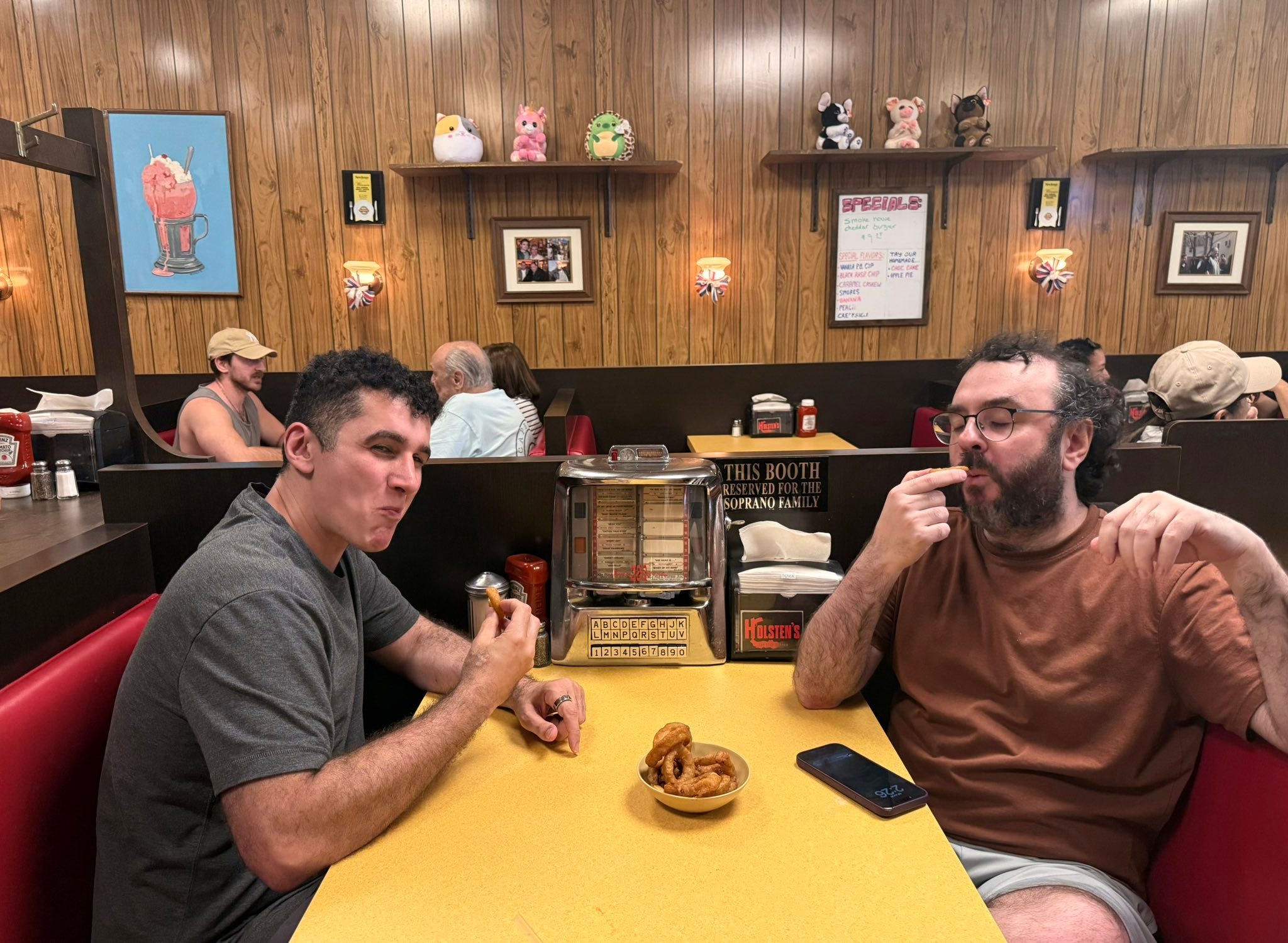
Instead of getting into David Chase’s mind, we might talk about probabilities of different events happening conditional on what we know about everything in the show’s universe leading up to the last scene.
I think, from that perspective, Tony most likely went on living. Maybe this is too rationalist-brained, but the base rate for being murdered during any one meal is pretty low, even for a mob boss. Note also that at the point of the family dinner at Holsten’s, Phil Leotardo is dead and Tony has come out of hiding. Tony had gotten permission from Butch to take Leotardo out. It’s possible that Butch decided that he would also betray Tony after Phil was gone. This is the most obvious scenario that results in death, but it’s a stretch. We don’t see much of Butch in the show, and he seems like a pretty weak and passive guy, not one to betray his boss and then murder a New Jersey boss in a double-cross. If we’re going to return to Chase’s intentions here, we might say that it would be weird if he planned for such a minor character to be the one who ultimately does Tony in.
If not Butch, there are of course other possible killers, given how many people Tony has hurt over the years. But why assume it’s going to happen at that moment? Note that Tony looks up when the restaurant door opens. We know Meadow is coming in at that moment. There’s no reason to think that he’s looking up for any other reason. Maybe he happens to see the guy in the Members Only jacket pointing a gun at his face and goes unconscious, but it’s arguably not implied in the scene. The main suspect goes to the bathroom, invoking a scene from The Godfather, but this is only relevant if David Chase put it there as a clue; in a world where we’re looking for information based on what happened in the show, this provides no evidence either way. The same can be said about the fact that one of the guys sent to kill Sil also wore a Members Only jacket.
We know that Carlo likely flipped, and Tony’s lawyer told him that there was an 80-90% chance he would be indicted. From that perspective, the most likely outcome here is Tony dies in prison. The New Jersey mob becomes much less powerful and influential. Paulie isn’t leadership material, and with Sil in a coma, who exactly is left? Patsy? Well, Meadow is going to be his daughter-in-law, and maybe she ends up being in control. But this is just fanfic, as cool as it is to imagine. Perhaps Tony dies in prison after years of watching Gary Cooper movies, knowing that the ideals he dedicated his life to have become completely irrelevant, and fulfilling his prophecy at the start of the show that he had come in at the end of something. Maybe he’s angling for a Trump pardon right now.
That was at least my interpretation when I thought that the ending was ambiguous. But I sent an earlier version of this article to Tyler Cowen, and he referred me to this series of articles, which absolutely convinced me that Chase meant to kill Tony.
We are left with questions about who exactly ordered the hit, what happens to the family afterwards, and how we should feel about the uncertainty itself. I have come around to accepting Chase’s framing of the philosophical approach to the ending. Life is short, and we only have insights into some things and not others. We don’t have the right to know everything we want to know. Some kinds of curiosity will never be quenched. I imagine people on their deathbeds regretting that they’ll never know who wins the Super Bowl next year, what the outcome of a war will be, or what their daughter will be like when she grows up.
Chase appears to have realized that giving us a gory final scene in which AJ and Carmela are splattered with blood would have completely distracted from the meaning of the ending. Instead, we are left with, at first, a haunting semi-mystery, and finally an understanding of what happened to Tony. We take his perspective throughout the whole series, but with the final scene our identification with the character reaches its apex, and we are forced to endure the unsettling paranoia of his existence at a more visceral level and carry it with us. Until we go back and do the analysis, we don’t know what happened to Tony any more than he himself ever does, since his world simply goes black. Before getting to that conclusion, we can debate the Cub Scouts, the two black guys walking in, the Members Only jacket, and what it means that Meadow can’t parallel park. But, despite the mysteries that remain, there is a correct answer here from the perspective of what the creator of the show intended.
All of that said, if someone wants to ignore Chase’s intentions and imagine Tony trying to rebrand himself as a MAGA in 2024 in order to get a pardon, with Meadow as his photogenic, high-powered mob attorney going on Fox News to make her case, I certainly won’t begrudge them for that. And if they wanted to write that fanfic, I would probably read it.
A Product of Its Time
The Sopranos, which included so much commentary on American culture, has itself become a landmark in the entertainment industry as HBO’s first true mass-culture drama and the show that launched the era of prestige TV.
It’s often said that the show couldn’t be made today, with a focus on the things that characters say about blacks, women, and gays. This is true – the racism and sexism are part of the reality-respecting fabric of the universe. There’s also the more subtle fact that, throughout the show, stereotypes often reveal themselves to be true. For upper-middle-class New Jerseyans, it’s simply the case that urban blacks are seen as a menace, though for Tony and his crew they can be useful for carrying out certain jobs, or as targets to blame for crimes that they need to cover up.
If you want to see how political correctness can ruin a work of art by making it pedantic and trying to shoehorn it into the political concerns of its day, see The Many Saints of Newark, the 2021 Sopranos prequel that clearly revolves around telling a story fit for the Black Lives Matter era. The Sopranos, in contrast, reflected the reality of its time while tapping into universal human concerns. On the realism front, it also certainly didn’t help that Many Saints began with a voiceover from Chris, speaking to us about Tony’s betrayal from beyond the grave. Before writing this article, I thought I had read that Chase was in the early stages of Alzheimer’s, but looking it up I can’t find any evidence of that, and so I guess I must’ve imagined it because I wanted to find a way to explain away the movie.
One unique aspect of the late 1990s and early aughts was that it was the last time middle-aged adults grew up in the era before what we might call the great disillusionment. Tony is about 40 when the series premiered, which means he was born around 1959 (James Gandolfini was born in 1961). The American decline in trust in institutions began in the late 1960s into the 1970s, taking off with Watergate and discontent with the Vietnam War. This means Tony is old enough to have gone through most of his childhood in a country where mainstream American culture believed in itself, the fundamental goodness of the country, and its place in the world. The older characters, like Livia and Junior, can remember the Second World War. If The Sopranos began today, Tony would’ve been born in the mid-1980s, like AJ. He would’ve already had the internet as a teenager, and Watergate would have been a decade before his birth. His early years would have already seen the rise of therapy culture, and he may have been tested for ADD or told as a child that he had anxiety because his mother yelled at him.
The 1960s and 1970s were a cultural watershed. The Sopranos revolved around conflicts between those who came of age during and just before that era and those born after it. The class aspect can be seen in Melfi being about the same age as Tony but, as a psychiatrist, having bought into the precepts of therapy culture before it had filtered down to the working class and the criminal underground.
We still see generational tensions today, but the remaining disagreements are nowhere near as sharp. It’s been observed that Generation X has a distinctive affinity toward Trump, perhaps because they were born too early for pronoun people, gender fluidity, and white guilt, but late enough that they’re not that bothered by Trump’s crudity and opposition to existing institutions. But the gaps on fundamental questions about how human beings should live between generations today seem much smaller than those between Tony’s generation and that of AJ.
Should you hit children in order to discipline them? Is getting professional mental help something that should be discouraged and people should be ashamed of? Should kids spend large swaths of their childhood outside exploring without adult supervision? Should it be normal for women to get married in their twenties and start having children? Should homosexuality be accepted or stigmatized? Is it acceptable to prefer your children marry someone of the same race? The Sopranos came out at a time when each one of these questions was still something of a live issue, but they were all being settled in the progressive direction, that is, toward prioritizing safety, equality, and individual liberty. The victory has been so complete that we have trouble getting into the heads of those on the losing side. Intergenerational disputes today about announcing pronouns and trans women in sports are nothing compared to what were considered controversies before.
According to its own measures, we can argue that therapy culture has succeeded. People are safer and freer than they have ever been. But are they happier than the era before cynicism took over the culture? Not according to the data, despite improvements in objective living standards. People are marrying and having children later, if ever, and if this doesn’t show up in data indicating we’re less satisfied with our lives, it does make everything less meaningful, and pose a long-term cultural and economic threat to the country. In art, while we all know we should condemn figures like Tony Soprano and Don Draper on paper, when we spend time with them we become captivated. It seems that practically all of our heroes today either lived in a different era or have supernatural powers.
The Sopranos was about the last time a more romantic era could rub up against a culture that has been fully soaked by moral relativism, therapy-speak, and the language of medicine, trauma, and biology replacing that of honor and virtue. Yes, from a broader perspective, we all know that the decline of the Mafia was a good thing. They terrorized those around them and were a blight on their communities, no matter how many cool movies they inspired. But one can’t help but think that the fall of the mob represents a microcosm of what has gone wrong in American life. It may have been a life of crime, but at least something besides safety and comfort mattered to them. Or maybe they didn’t really live by a code any more than people today, and mobsters were always a bunch of sociopaths and weasels. But at the very least the idea that lives of glamour and higher virtues were possible was enough to stave off many of the doubts and much of the neuroticism that plague modern life.
Obviously, the point of this analysis is not to suggest that there’s any going back. The cultural changes we’ve seen are to a large extent not based on conscious choices anyone made. Cable news, the internet, and other newer forms of communication technology made it impossible for leaders and prominent figures to maintain the facade of competence that caused people to assume that they always knew what they were doing. The birth control pill, as Jesús Fernández-Villaverde argues, may not have changed sexual morality overnight, but after a delay it was bound to reorder how we perceive relationships between men and women. Similarly, the mob was bound to decline in the era of electronic surveillance, not to mention the RICO Act.
Yet to remove human agency from the picture would be to make the same mistake as modern therapy culture. We decided to increase “mental health awareness,” fund psychiatry, and grant it prestige. Everyone becoming disabled was the result of a literal law passed by Congress and signed by the president. It’s hard to actually know what it means to say whether “we” are responsible for anything in terms of broad societal outcomes; any such talk has to be understood as metaphorical, since there is no straightforward way to translate the idea of personal responsibility into collective praise or guilt. But it can be a useful metaphor, if it provides a framework through which to judge legal and cultural developments, which I think it does here.
In addition to the time-specific aspects of the show, we have universal lessons about the banality of everyday life, even among those whose hours appear full of action, glamour, and meaning. Tony kills those who snitch to the government, hangs out with Frank Sinatra Jr., and goes on a streak at the roulette table with a beautiful woman at his side. He’s also constantly stuffing his face with cake, taking off his shoes and belt in hopes of making the number on the scale go down, and gets clobbered with a phone by his wife for complaining about how much pulp is in the orange juice she brought home.
As I’ve met more famous and important people over the years, and become somewhat known and admired myself, I’ve come to appreciate this more and more. I used to meet prominent individuals and be amazed how much they were like the rest of us. They also give awkward handshakes, run into uncomfortable pauses in the midst of conversations, have neuroses and topics they seek to avoid, and twiddle their thumbs while not knowing who to talk to at a party, if even for a brief second before an admirer latches on. This is difficult to capture in art, and you don’t want to go too far in the direction of cynicism by pretending there is nothing romantic or beautiful in the personalities or day-to-day lives of those who accomplish great things. More than any other show, The Sopranos captures the contradictions and tensions between the vitality it takes to climb a hierarchy to the top and the banality and inevitable decay that are unavoidable parts of the human condition.
The Sopranos emerged at a moment when the cultural capital of mid-twentieth-century America was in its last stages of being spent. Some more recent developments in American life are certainly worth celebrating, including everything from easy access to psychiatric drugs that can reduce anxiety to the ability to start a business in a city without being shaken down for protection money. But it would be pure delusion to believe that there isn’t a lot that is worth missing. The Sopranos came along at exactly the right time to provide something of an accounting of what had changed. It remains relevant and continues to inspire because it avoids simple lessons as it forces reflection on how America has developed since what we all feel was our golden era, while also giving us a story that provides endless material for nuanced debates about what has been gained and lost, and whether it was all worth it.
I used to think The Wire was the greatest television show ever made, but I’ve lately come to think that distinction belongs to The Sopranos.
David Simon (in)famously described The Wire as “a political tract masquerading as a cop show,” and I suspect that fact was a large part of why critics, and I myself, admired it so much. Its politics aligned almost perfectly with the attitudes of the educated elite at the time: skepticism of policing, standardized testing, markets, institutional accountability, and practically every attempt to measure or punish failure.
But many of those political judgments have aged like milk. It turns out that policing, deterrence, and incarcerating repeat offenders really can reduce violent crime and make our cities livable. Standardized testing, while imperfect, can reveal achievement gaps and impose accountability on institutions that would otherwise conceal failure.
The Wire remains a great work of television, but what the critics saw as profound institutional pessimism now seems more ideological and historically contingent than I once recognized. The Sopranos, by contrast, doesn't beat its viewers over their heads with a fashionable theory of public policy. Its subjects of self-deception, appetite, resentment, family, mortality, and the near-impossibility of genuine change are timeless.
Good essay. Watched an episode of Mad Men recently and found myself thinking that no prestige drama has matched The Sopranos for characterological depth. Carmela and Christopher feel like fully realized human beings in a way e.g. Skyler White or Pete Campbell never quite do.